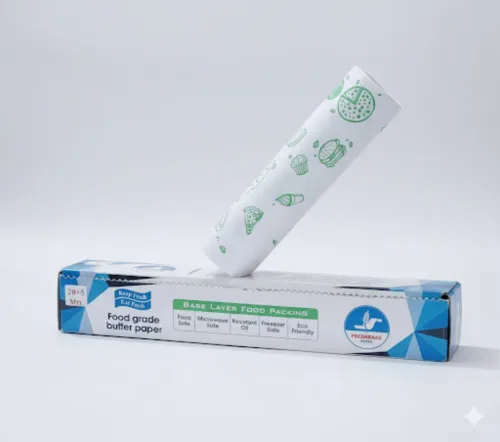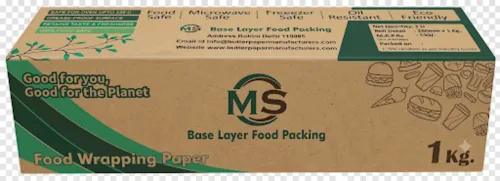
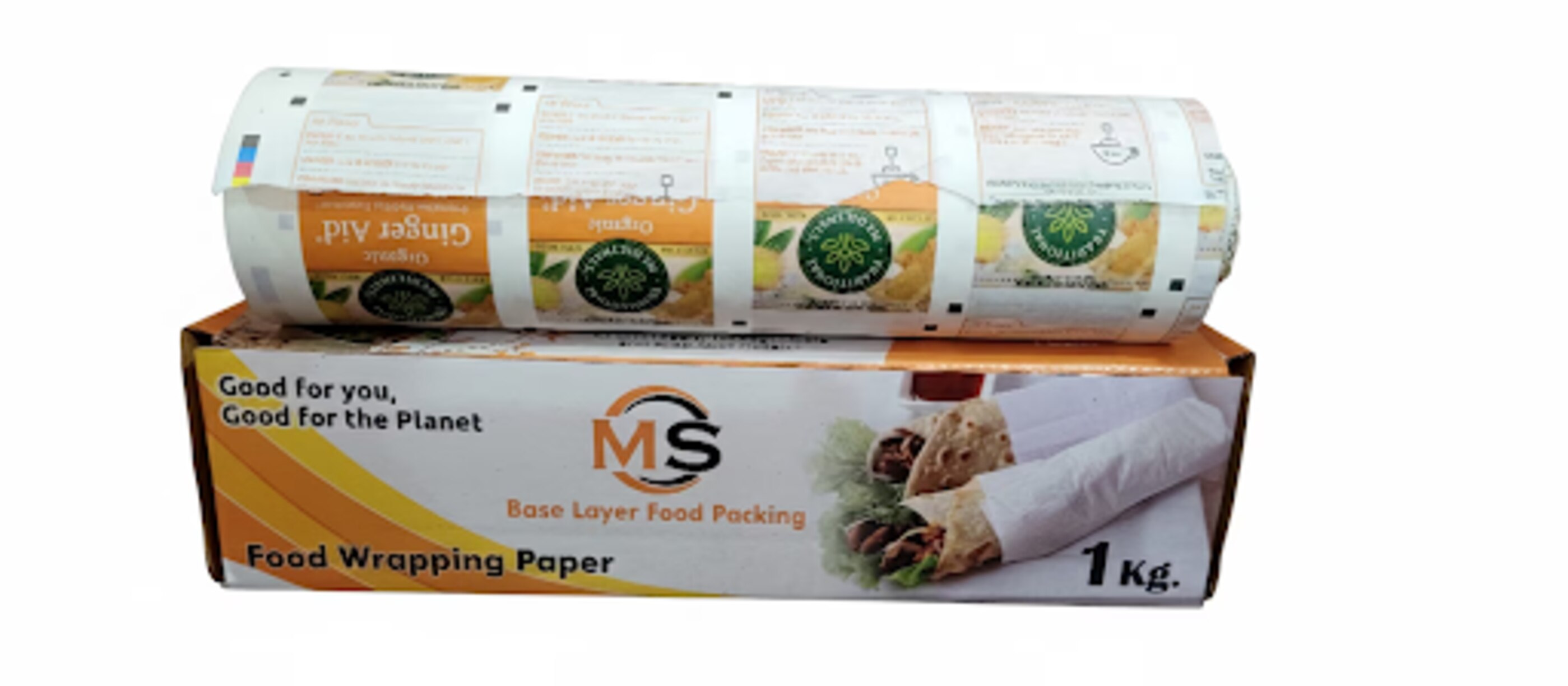
A roll that meets its quoted GSM can still waste material, fail on a wrapping machine, or leak grease in distribution. You need to match the web specification to the food, equipment, market and total cost, then verify the supplier’s claims with production-intent samples and documented tests.
Key takeaways
- Specify roll width, pitch, lanes, overlap, core, and winding direction.
- Choose GSM and barrier performance for the food and storage conditions.
- Request food-contact documents and inspect roll geometry before production.
- Compare usable metres, waste, downtime, and wrapped-unit cost—not quoted price alone.
Turn the Product and Machine Requirements Into a Roll Specification
A roll that fits the supplier’s catalogue may still waste material or stop your line. Build food packaging roll specifications from the product dimensions, wrapping overlap, machine pitch and lane arrangement.
- Roll width calculation: add the finished web width required by the forming shoulder or wrapper to side seals, overlap and trim; multiply the lane width by the number of lanes, then add inter-lane trim. Confirm the result against the machine’s permitted web-width tolerance.
- Roll length calculation: multiply the web length used per pack by the target pack count, then divide by 1 minus your measured waste rate. Specify the core inside diameter, maximum outside diameter, winding direction, splice marking and allowable telescoping.
- GSM and net weight: calculate net paper weight in kilograms as width in metres × length in metres × GSM ÷ 1,000. Exclude the core, adhesive and packaging from net weight, and state whether the quotation uses nominal or tested GSM.
Then qualify performance against the product and line using the machine’s specified handling limits. Record the required caliper, tensile strength, tear resistance and moisture range. Higher GSM can improve handling but increases material consumption and roll weight; it does not automatically provide better grease resistance.
Approve a production-intent roll only after checking its actual dimensions, weight and unwind behaviour.
Choose GSM and Barrier Performance for the Food, Not the Product Name
Choose GSM for food wrapping from the handling job, not from the word “butter” or “greaseproof.” A lower GSM suits folded interleaves and short-contact wraps; a higher GSM adds tear resistance and stiffness but consumes more material and may resist tight folds. Do not increase GSM to fix oil leakage: barrier construction determines that performance.
| Material or structure | Suitable wrapping format | Limitation to check |
|---|---|---|
| Dense greaseproof paper | Dry bakery goods and short-contact oily foods | Can lose resistance with hot fat or long storage |
| Dispersion- or polymer-coated paper | Sauces, butter and prolonged grease contact | Coating damage at folds, scores and cut edges |
| Foil laminate | Light, oxygen, aroma and moisture protection | Foil can crack under sharp folding or flexing |
| Metallized film laminate | Flexible packs needing useful light and moisture protection | Not equivalent to foil for dead-fold, puncture resistance or absolute barrier |
Require a greaseproof paper test report that names the method, temperature, contact time and substrate. The KIT test measures surface grease resistance, not every failure in a finished wrap. Test production-intent rolls after winding, storage and temperature exposure for odor transfer, adhesive odor, ink set-off and migration risk.
Specify heat-seal performance separately: seal-initiation temperature, seal window, dwell time, jaw pressure, seal strength and hot tack. A foil laminate versus metallized film decision must match the wrapping machine and the food’s fat, aroma, oxygen and moisture sensitivity.
Verify Food-Contact Compliance and Application Safety
A generic “food-safe” claim does not prove that a finished roll suits your product. Request a food-contact declaration naming every paper, coating, adhesive, ink and aluminium layer, plus the food type, contact time, temperature and intended side of contact. Check the declaration against the destination market and the actual wrapping process.
Ask for these records:
- A migration test report using the finished construction, with test liquids, time, temperature and pass/fail results stated.
- A batch-specific certificate of analysis covering GSM, moisture, coating or foil construction, and relevant barrier results.
- An allergen statement covering raw materials, processing aids and cross-contact controls.
- A batch traceability record linking the roll, production date, raw-material lots and test results.
- Sensory or odour results and set-off evaluation after winding, storage and realistic temperature exposure.
| Market | Requirement to verify | Evidence to request |
|---|---|---|
| European Union | Regulation (EC) No 1935/2004; also check national paper-and-board rules because no single fully harmonised EU measure covers them | Declaration and supporting dossier for the complete roll |
| United States | 21 CFR 176.170 or 176.180, as applicable; verify separate rules for inks, adhesives, coatings and foil components | Layer-by-layer declaration naming food type and contact conditions |
| Other destination markets | The importing country’s paper, aluminium and packaging-contact provisions | Market-specific legal assessment, test report and declaration |
For greasy foods, require the TAPPI KIT level and test conditions; Cobb water absorption is not a grease test. If the roll enters form-fill-seal equipment, qualify seal initiation temperature, seal window, dwell time, pressure, seal strength and hot tack separately.
Check Roll Geometry Before It Reaches the Packaging Line
A roll mounts and runs only when its geometry matches the machine’s mandrel, maximum roll diameter, web path and control range. Specify the core diameter, finished outside diameter, roll width and length, with tolerances; a loose core or oversized roll stops loading before the first wrapper starts.
| Machine feature | Confirm on roll specification | Failure if mismatched |
|---|---|---|
| Mandrel and chuck | Core diameter, core material and runout | Roll will not mount or will wobble |
| Unwind stand | Unwind direction, maximum outside diameter and roll hardness | Web feeds backward, slips or surges |
| Edge control | Web width tolerance, edge damage limit and allowable telescoping | Tracking faults, wrinkles or tears |
| Splice detector | Splice construction, location marking and maximum splice count | Unmarked joints cause jams or rejected packs |
| Tension system | Operating web tension range and winding profile | Breaks, slack web or uneven unwinding |
Ask for roll hardness measurements across the width and radius, plus records of edge condition. Excessive roll hardness can crush the core or make the web unwind unevenly; soft winding creates sagging layers, while telescoping shifts the edge sideways and triggers tracking faults. Confirm whether splices are permitted and where each splice is marked.
Run a trial at production speed, recording tension, breaks, wrinkles and stoppages—not just whether the roll fits.
Compare Suppliers on Consistency, Not One Attractive Sample
One attractive roll proves almost nothing; compare samples from multiple production lots before approving a supplier. Request results for basis weight, caliper, KIT or equivalent grease resistance, moisture, web width, roll dimensions, odor, barrier values, and cross-direction and machine-direction strength.
| Check | Record across lots | Failure on the wrapping line |
|---|---|---|
| Basis weight and caliper | Separate basis weight tolerance and caliper tolerance, with test methods | Different stiffness, folding, porosity, or material usage |
| Width and geometry | Width tolerance, core diameter, outside diameter, winding direction, hardness, telescoping, and edge damage | Poor tracking, mounting problems, or web breaks |
| Splices | Splice frequency, construction, location marking, and maximum permitted count | Unplanned stops or a splice entering the wrapped pack |
| Barrier and moisture | KIT result, moisture range, coating or laminate details, and odor | Grease migration, poor seal performance, or off-flavour |
| Traceability | Batch traceability linking rolls to pulp, coating, adhesive, foil gauge, and production site | A failed lot cannot be isolated or recalled |
For a supplier such as Baselayer Food Packing, require retention samples from each approved lot and written change notification before changes to pulp, coating, adhesive, foil gauge, or manufacturing site. Define numerical acceptance limits in the purchase specification, not after a roll fails.
Run production-intent material on your wrapping machine; laboratory results cannot expose every winding or splice problem.
Related products
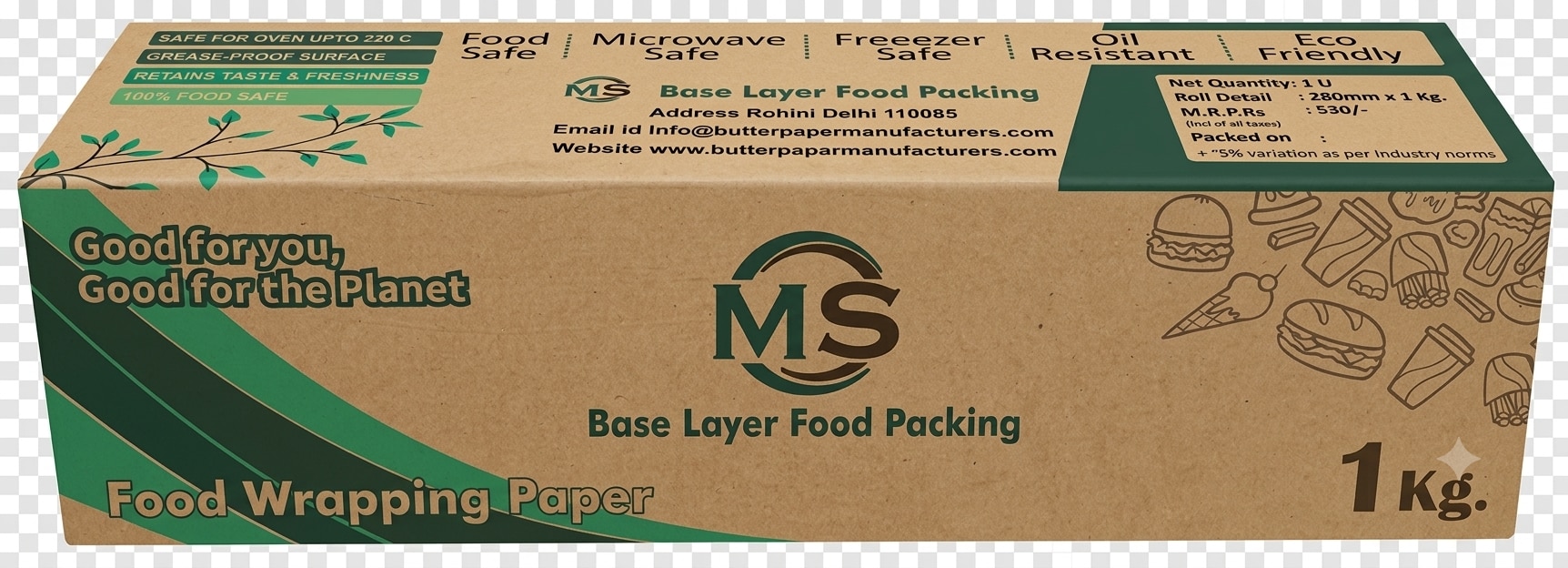 | Food Packaging ₹130 available in different sizes and gsm View product → |
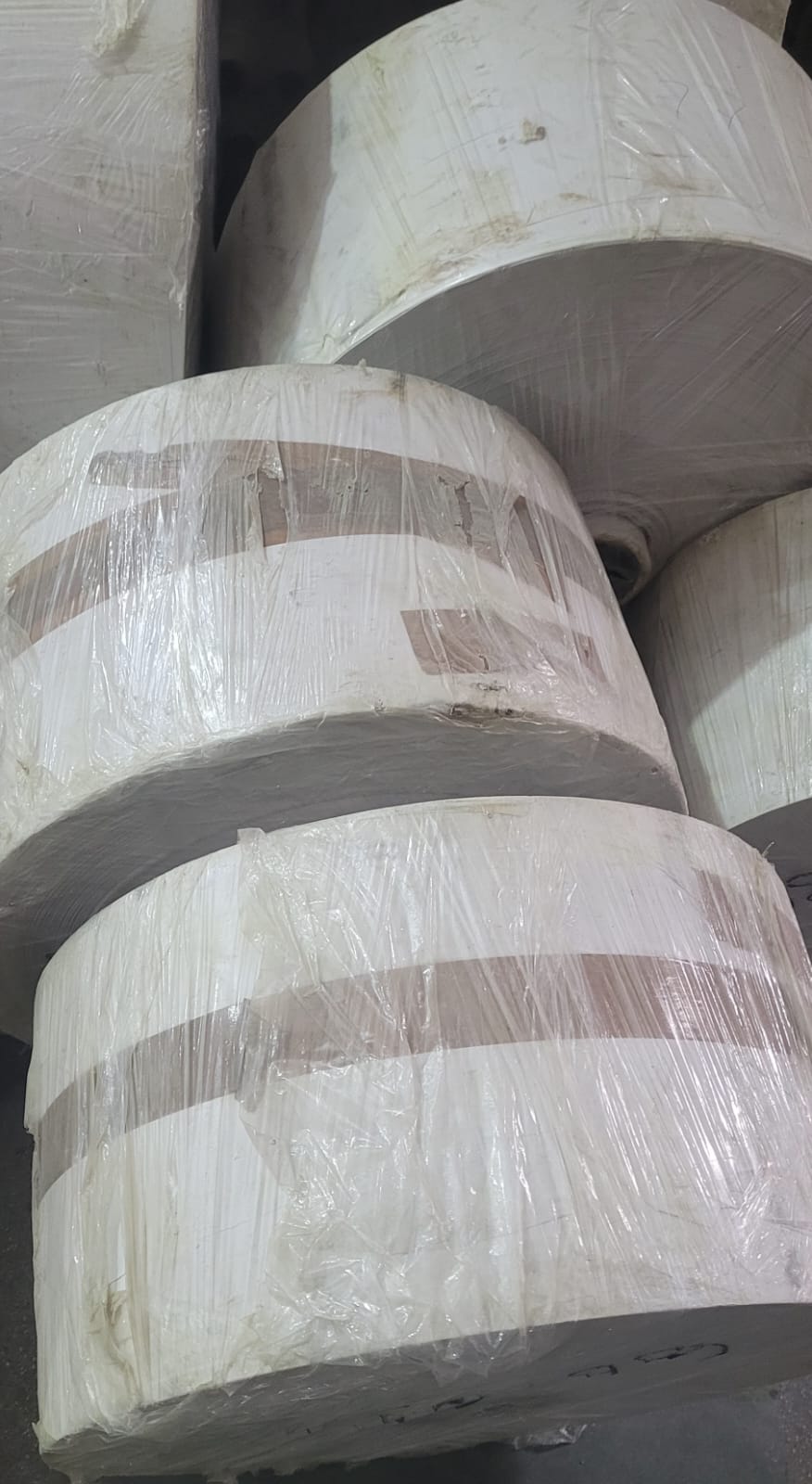 | Butterpaper Jumbo Roll (40 to 50gsm) size (10 inch to 12inch) JUMBO ROLL bleach kraft paper available in 40 gsm to 50gsm in various different sizes as per customer requirement. View product → |
Calculate the Cost per Usable Metre or Wrapped Unit
A quoted 1,000-metre roll does not deliver 1,000 sellable metres. Compare suppliers using landed cost divided by material that passes inspection, survives conversion and reaches the pack.
| Cost element | Calculation | Include in comparison |
|---|---|---|
| Roll material | Quoted roll price ÷ delivered metres | Convert to price per usable metre after losses |
| Freight | Shipment charge ÷ total usable metres | Allocate across the actual order, not one roll |
| Trim waste | Roll length × trim-waste percentage | Include edge trimming and format changeovers |
| Rejected rolls | Rejected metres ÷ ordered metres | Use your agreed acceptance rate or lot history |
| Setup | Changeover labour and machine downtime ÷ usable output | Charge each production run |
| Minimum order quantity | Unused stock, storage and obsolescence cost | Include the excess created by the minimum order quantity |
Use one forecast for every quotation. Calculate usable metres as delivered metres minus trim waste and rejected metres, then add freight and setup costs before dividing by that result. A low price per usable metre can become expensive if the supplier’s rolls generate more stops or rejects.
For finished packs, calculate cost per wrapped unit by dividing total landed material and setup cost by the number of accepted units produced.
State the roll length consumed per unit, splice losses and machine speed in the comparison; otherwise a supplier with a cheaper roll can win on paper while costing more at the packaging line.
Frequently asked questions
How do you create a food packaging roll specification?
Start with product dimensions, wrapping overlap, machine pitch, lane arrangement, roll width, core size, winding direction, and required barrier performance.
How should you choose GSM and barrier performance?
Match GSM, grease resistance, moisture resistance, oxygen protection, and heat-sealing needs to the food, filling process, and storage conditions.
What food-contact documents should you request from a roll supplier?
Request the material specification, food-contact declaration, test reports, batch traceability details, and documents identifying inks, adhesives, coatings, or foil laminates.
How can you compare the real cost of packaging rolls?
Calculate cost per usable metre or wrapped unit after accounting for trim, rejected material, setup waste, line stoppages, and roll changes.
Related products
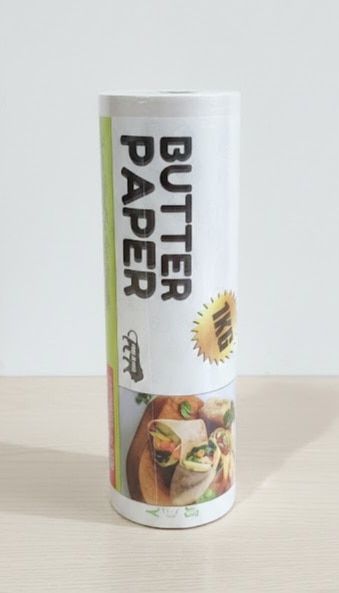 | Food Packaging Butterpaper roll 50 gsm to 60 gsm available View product → |
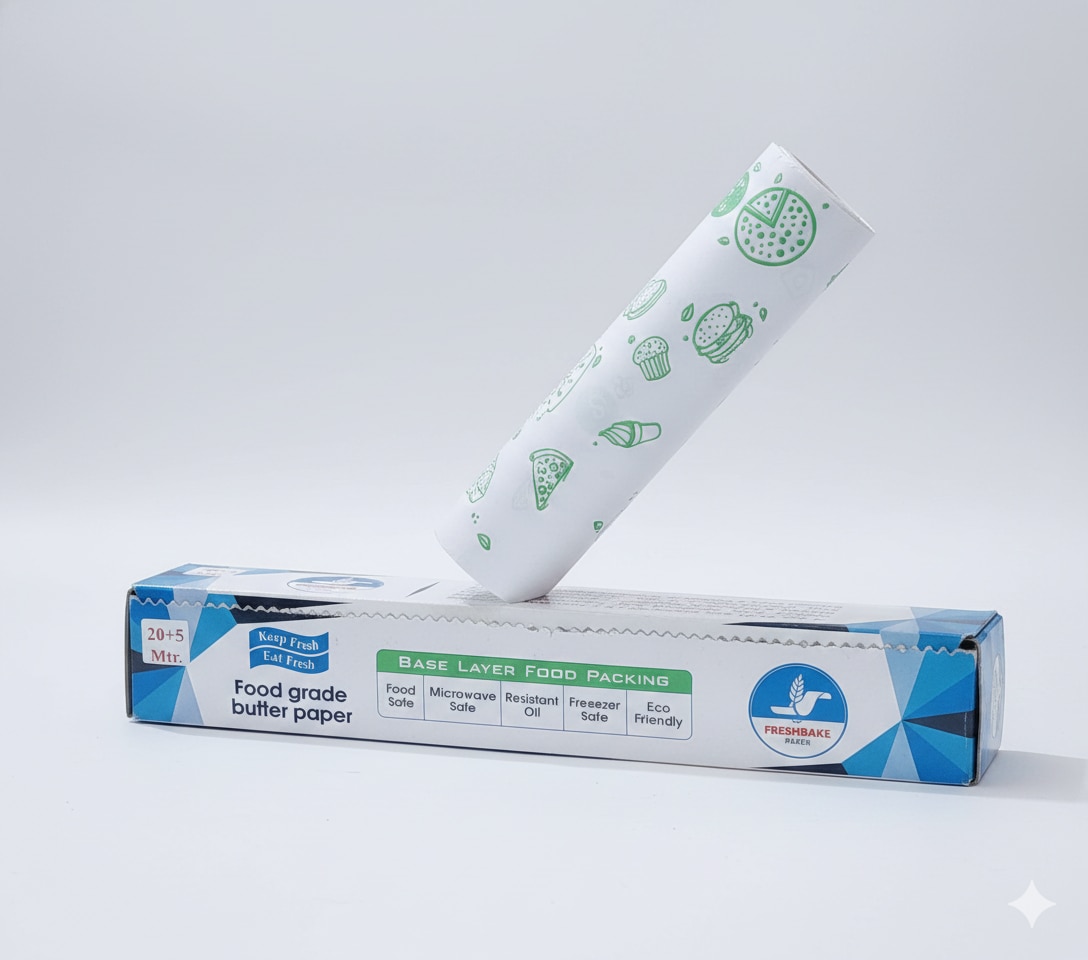 | Food Packaging Butterpaper Roll In 20+5 Meter butterpaper roll in 25 meter used for food wrapping View product → |
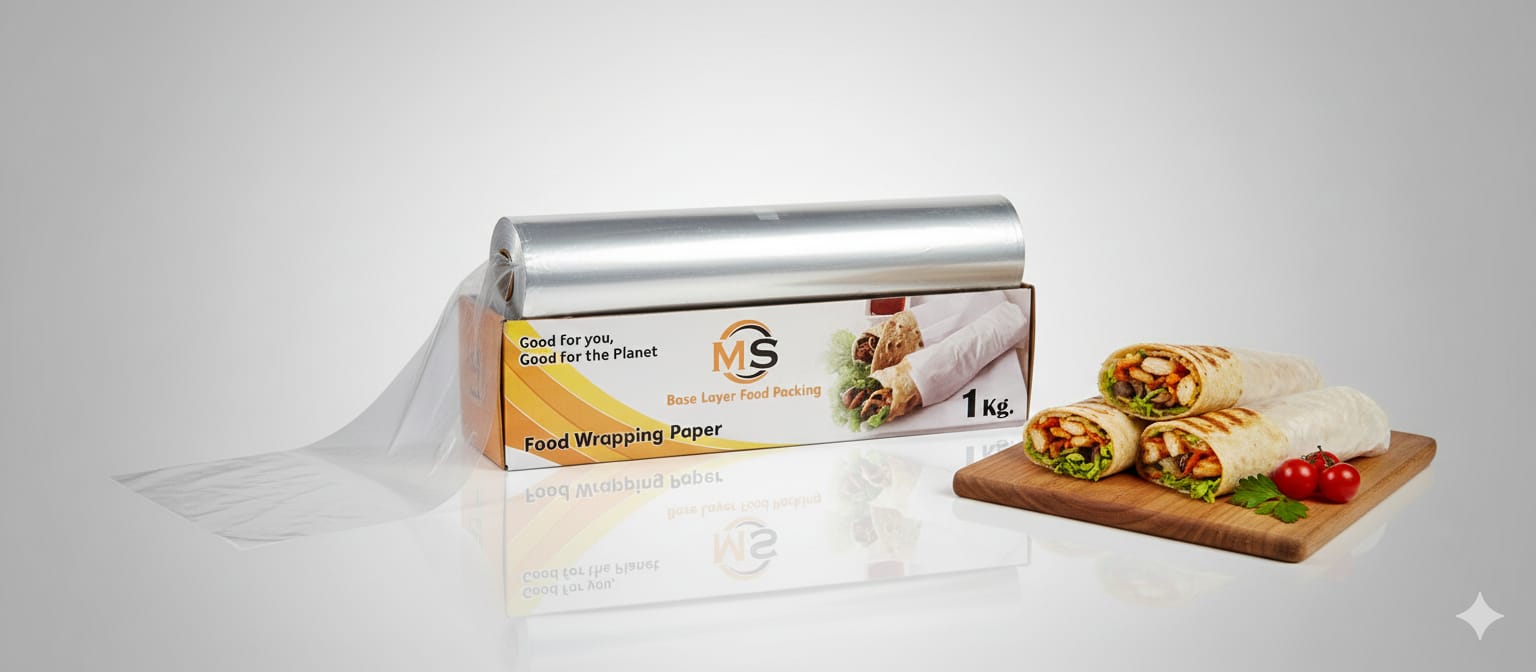 | food packaging FOIL PAPER [ 2 In 1] (1kg net weight) Foil paper is a high-performance material that combines the strength and versatility of premium paper with the unmatched barrier properties of... View product → |