A wrap that handles a dry bun can fail when it meets hot oil, steam, acidic filling or reheating. You will be able to match paper, greaseproof grades and foil laminates to the food’s temperature, contact time, moisture and handling demands, then give a supplier a specification that can be tested rather than guessed from a GSM label.
Key takeaways
- Record filling temperature, contact time, pressure, oil, steam and acidity.
- Use greaseproof paper for oily foods when moisture and heat exposure are limited.
- Confirm oven temperature, cooling time and release performance for bakery wraps.
- Specify barrier, heat retention, dimensions and compliance documents before ordering rolls.
Start with the exposure conditions, not the paper name
Define the exposure before you compare paper grades. Hot food wrapping is a heat-and-contact problem: record the food’s filling temperature, the time it touches the wrap, the pressure applied by the product, and whether oil, steam or an acidic filling reaches the surface.
1. Record the filling temperature at the moment the food enters the wrap. Measure the product, not the pan or oven setting; a fried snack at 90°C creates a different demand from bread packed at 45°C.
2. State whether the wrap is used during hot holding, after cooling, or during transport. Include the holding temperature and duration. A material that survives brief contact with warm pastry can soften, stain or lose strength beside a fatty filling held hot for an hour.
3. Describe every later heat exposure. Record the reheating temperature and time, oven temperature and time, and whether the wrap touches a tray, heating element or direct flame. Do not assume a grease-resistant sheet is oven-safe or microwave-safe.
4. Record the food itself: oil level, moisture, acidity, crust, filling and sharp edges. Pressure from stacked products, folds and creases can force grease through weak areas faster than a flat laboratory sample suggests.
Treat a greaseproof or kit-test rating as comparative material data, not a shelf-life guarantee. Request the test temperature, oil used, contact time and pressure, then compare those conditions with actual use. Qualification fails when the wrap passes a headline test but leaks, sticks, scorches or transfers odour in production.
Match greaseproof, butter paper and kraft paper to the food
Choose the paper by the dominant exposure: oil needs grease resistance, while steam and condensation need moisture resistance. These are separate properties; greaseproof paper can stop visible oil yet allow water vapour through.
| Material | Best match | Characteristic to verify |
|---|---|---|
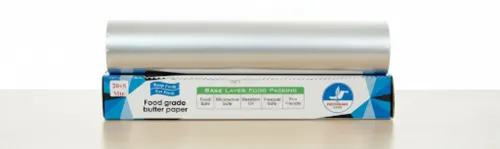
| Butter paper | Butter-rich products and light pastry wrapping | Actual paper grade, basis weight, treatment and fatty-food suitability; “butter paper” alone is not a specification |
| Greaseproof paper | Oily foods, fried snacks and pastries with buttery fillings | Oil-penetration result tested at the product’s temperature, contact time and pressure |
| Kraft paper | Bread, dry bakery goods and outer wraps needing stiffness | Strength, basis weight and food-contact status; ordinary kraft paper is not a reliable oil barrier |
| Moisture-resistant or coated paper | Cakes, steamed bread and hot pastries releasing condensation | Water-vapour or wet-strength performance, because steam can soften plain paper and damage crust quality |
For fried snacks, select grease resistance that matches the oil load and holding time, then check whether the coating affects crispness. A folded or creased wrap can leak even when its uncreased test result looks strong. Ask for the test conditions rather than accepting only “greaseproof” as a grade.
For bread and cakes, moisture management matters more than maximum oil resistance. Do not close a hot product tightly unless the construction allows cooling; trapped steam can cause sticking, sogginess and loss of tear strength. For fatty or acidic fillings, qualify the complete structure, including paper, coating, adhesive and ink.
Confirm the formulation is PFAS-free where required, and request food-contact documentation for the intended food category.
Treat bakery wrapping as a cooling and oven-use problem
A roll for bread packaging must be chosen by what happens after filling, not by the word “greaseproof.” For oven-bound dough, select oven-safe paper with a documented maximum temperature and exposure time; ordinary greaseproof paper and butter paper are not automatically interchangeable. Check direct tray or heating-element contact, curling, scorching and release after heating.
| Use | Suitable roll approach | Main check |
|---|---|---|
| Oven-bound dough | Parchment-style oven-safe paper | Confirm temperature, time, tray contact and release performance |
| Hot, steaming bread | Controlled-porosity, vented or wet-strength paper | Prevent trapped steam from softening the sheet and crust |
| Cooling pastries | Moisture-resistant paper or a qualified laminate | Check sticking, tear strength and the required cooling period |
Close the pack only after deciding whether crust quality or heat retention matters more. Steam trapped during cooling condenses on the paper, reducing tear strength, encouraging sticking and turning a crisp crust soft.
Vented bakery packaging helps release moisture; a fully closed barrier suits the product only when the cooling time and condensation load have been tested.
- For pastry wrapping, test the actual filling temperature, contact time and fat level, not a room-temperature sample.
- Do not infer microwave, freezer or direct-flame suitability from an oven-safe claim.
- Ask for roll width tolerance, core diameter, maximum roll mass, winding direction, splice policy and unwind performance; web breaks and poor tension can stop a converting line even when the paper passes grease tests.
Use foil laminate when the barrier and heat-retention brief demands it
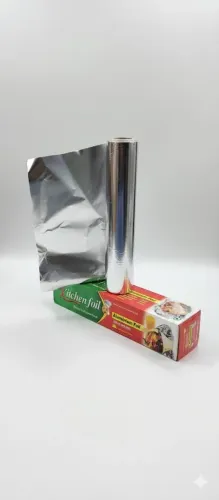
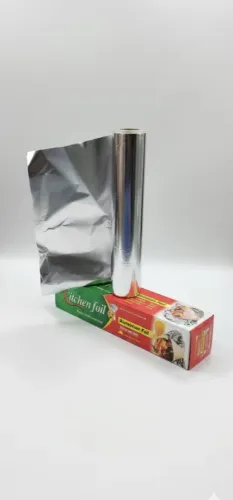
A foil laminated paper wrap earns its place when you need high resistance to light, oxygen, aroma and moisture, plus heat retention during short hot holding. It suits oily fillings, sauces and products whose quality deteriorates when steam or air reaches them. Foil thickness alone proves nothing: the finished laminate must be intact.
For acidic and salty foods, evaluate the complete construction, not just the foil. The adhesive, coating, ink, paper additives and exposed edges must be suitable for the food, temperature and contact time. Ask for food-contact compliance evidence and migration testing where the filling is acidic, salty or fatty.
Before approving the wrap for hot contact or sealing, check:
- Maximum food temperature and contact time, including hot holding or reheating
- Pinholes, folds, cracks, incomplete adhesive coverage and exposed paper edges
- Seal strength on the intended machine, sealing temperature and dwell time
- Moisture barrier performance after folding and during cooling
- Whether the paper side softens, sticks or loses tear strength as steam condenses
Do not place foil laminated paper in a microwave unless the supplier has validated that exact construction and provided operating limits. Aluminium foil can reflect microwave energy, arc at exposed edges and damage the oven; a paper backing does not make an unapproved laminate microwave-safe.
Give the supplier a qualification brief, not just a roll size
A supplier approval file should connect food-contact evidence to the roll’s behaviour on your machine. Give Baselayer Food Packing the same qualification brief you would give any converter, rather than asking only for a width and GSM.
1. Request food-contact documentation naming the legal basis for every paper, coating and adhesive: an applicable FDA regulation, effective food-contact notification, prior sanction or equivalent Indian requirement. For greaseproof grades, obtain a current formulation statement confirming PFAS-free greaseproof paper, including changes to coatings, adhesives and suppliers.
2. Ask for a GSM comparison across the proposed grade and a sample roll. Record basis weight, caliper, grease-resistance test method, test temperature, contact time and result. A headline “greaseproof” claim does not predict performance under hot oil, folds, pressure or acidic fillings.
3. Put the roll construction and delivery limits in writing: web width and tolerance, core diameter and unwind performance, maximum roll diameter and mass, winding direction, splice policy, roll hardness, telescoping limit, edge condition and curl.
Confirm the machine’s tension range and require a trial roll; a compliant paper still fails if it breaks, blocks or unwinds unevenly.
4. For printed or coated stock, request the intended food-contact side, drying or curing records, set-off testing and finished-roll odour information. For oven use, require results at the maximum temperature and exposure time, including direct tray or heater contact, curling, scorching and release.
Reject approval until the supplier’s documents, sample roll and production trial agree.
Related products
 | Food Packaging ₹130 available in different sizes and gsm View product → |
 | Food Packaging Butterpaper Roll In 20+5 Meter butterpaper roll in 25 meter used for food wrapping View product → |
Frequently asked questions
What exposure conditions should you record before choosing wrapping paper?
Record the food’s filling temperature, contact time, pressure, oil or steam exposure, and acidity before comparing paper grades.
When should you choose greaseproof, butter paper or kraft paper?
Choose greaseproof paper for oil resistance, butter paper for light food contact and presentation, and kraft paper when strength and handling matter more than high grease resistance.
What must you check when wrapping bakery products?
Check whether the wrap enters an oven, the oven temperature, release performance, steam escape, cooling time and the product’s fat content.
When is foil-laminated wrapping appropriate?
Use foil laminate when the application needs stronger barriers against light, oxygen, moisture or grease, or needs improved heat retention.
What information should you give a food packaging roll supplier?
Provide the food type, temperature, contact duration, dimensions, roll or sheet format, machine details, barrier needs, print requirements and required food-contact documents.
Related products
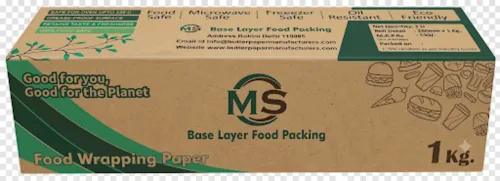
 | Food Packaging Butterpaper roll in 1kg 50-60 gsm available for food wrapping. View product → |
 | food packaging FOIL PAPER [ 2 In 1] (1kg net weight) Foil paper is a high-performance material that combines the strength and versatility of premium paper with the unmatched barrier properties of... View product → |
 | Food Packaging ₹135 available in different sizes and different gsm View product → |
 | Butterpaper Jumbo Roll (40 to 50gsm) size (10 inch to 12inch) JUMBO ROLL bleach kraft paper available in 40 gsm to 50gsm in various different sizes as per customer requirement. View product → |