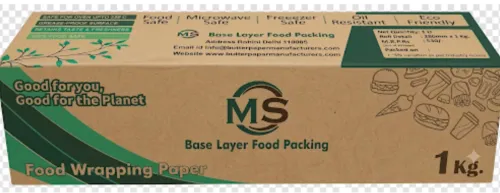

Aluminum foil is a routine consumable in many commercial food operations, yet purchasing decisions can have a significant cumulative effect when usage reaches hundreds of rolls or large bulk quantities. Restaurants, bakeries, caterers, cloud kitchens, food processors, retailers, and distributors looking for an Aluminum Foil Wholesaler should evaluate the complete cost and supply process rather than comparing only quoted prices.
A structured buying approach can help businesses choose quantities and specifications that match real operational demand.
Establish Your Monthly Foil Consumption
Begin with existing usage records.
Count how many rolls, packs, or bulk units are consumed during an average month. Include seasonal changes and unusually busy periods where possible.
For businesses operating several Delhi locations, collect consumption data from each outlet rather than estimating from one branch.
This provides a realistic purchasing baseline.
Standardize Common Specifications
Wholesale buying becomes easier when the organization has clear product requirements.
Document frequently used widths, lengths, thickness requirements where relevant, and intended applications. If several different formats are currently stocked, determine whether all are genuinely necessary.
Reducing unnecessary variations can simplify procurement and inventory management.
Compare Cost Per Usable Application
When evaluating an Aluminum Foil Wholesaler, avoid comparing only the headline cost of a roll.
Instead, consider how much material is required for a typical food item or preparation task.
For example, a poorly matched width may result in repeated trimming. A roll that is too narrow may require overlapping material. Either situation can increase actual consumption.
Monitoring usage during a short trial can help procurement teams estimate the effective cost more accurately.
Review Wholesale Readiness
A business may be ready for larger purchasing quantities when several conditions are present:
- Monthly consumption is predictable
- Product specifications are standardized
- Storage space is available
- Demand is recurring
- Reorder responsibilities are defined
- Several outlets use the same material
- Purchasing records are maintained
Without these basics, buying excessively large quantities can create inventory problems rather than savings.
Consider Replenishment Alongside Quantity
Wholesale procurement does not necessarily mean storing the largest possible order.
A restaurant with limited space may prefer planned repeat deliveries. A packaging distributor with warehouse capacity may benefit from maintaining larger stocks.
Businesses should compare storage cost, consumption speed, supplier lead time, and expected demand before determining order frequency.
Discuss Requirements Clearly Before Finalizing Supply
A productive supplier conversation should include dimensions, approximate monthly consumption, food applications, required quantities, and expected repeat demand.
Baselayer Food Packing supplies aluminum foil and other food packaging materials from Delhi for commercial and wholesale buyers. Providing detailed purchasing information allows the discussion to focus on material that fits the buyer's actual operations.
The most effective wholesale arrangement is one that balances material suitability, usable cost, storage, and supply continuity. By measuring consumption and standardizing specifications before increasing purchase volumes, food businesses can build a more controlled packaging procurement process and reduce the likelihood of emergency buying, excessive inventory, and avoidable material waste.
Keywords