
Growth changes the way a food business purchases packaging.
A restaurant adding delivery channels, a bakery opening another outlet, or a cloud kitchen launching additional brands may quickly discover that occasional packaging purchases no longer support its volume.
At this stage, finding a reliable Butterpaper Roll Supplier becomes part of building a more organised procurement process.
Packaging Orders Are Becoming More Frequent
One of the first signs is increasing purchase frequency.
If employees need to reorder butter paper every few days, the business should review monthly consumption and determine whether larger planned orders would be more practical.
Consolidating appropriate quantities can reduce repeated purchasing work.
Multiple Outlets Need the Same Specification
Expansion creates a standardisation challenge.
If each outlet independently purchases different roll sizes, the business may struggle to control costs and inventory.
A central specification can help ensure that locations use consistent formats where operationally appropriate.
Document:
- Required width
- Expected roll format
- Typical monthly quantity
- Outlet-wise consumption
- Reorder level
- Preferred packing configuration
These records make procurement easier to manage.
Packaging Waste Has Become Noticeable
Rapid growth can hide inefficiencies.
When sales increase, higher packaging expenditure may seem natural. But consumption should still be monitored.
If roll usage is increasing much faster than order volume, review dimensions and employee handling.
A more appropriate roll size may reduce unnecessary material use.
Emergency Purchasing Happens Too Often
Growing food businesses frequently underestimate packaging consumption.
When stock runs out, employees may buy substitute products locally. These emergency purchases can create inconsistent specifications and higher costs.
Establishing reorder levels with a Butterpaper Roll Supplier can help reduce dependence on last-minute buying.
Seasonal Demand Requires Better Planning
Delhi's food service market can experience significant seasonal fluctuations.
Wedding periods, festivals, corporate events, holidays, and promotional campaigns can increase takeaway and catering demand.
Growing businesses should review previous sales periods and estimate packaging requirements before anticipated peaks.
Storage Needs Have Changed
Larger purchasing quantities require appropriate storage.
Packaging should remain in clean and dry conditions, protected from dust, moisture, and physical damage.
If existing storage cannot accommodate increased quantities, ordering more frequently may be more practical than maintaining excessive inventory.
Procurement Teams Need Clear Supplier Information
As purchasing becomes more structured, informal ordering methods become less effective.
Buyers should maintain product specifications, previous order quantities, delivery records, and consumption information.
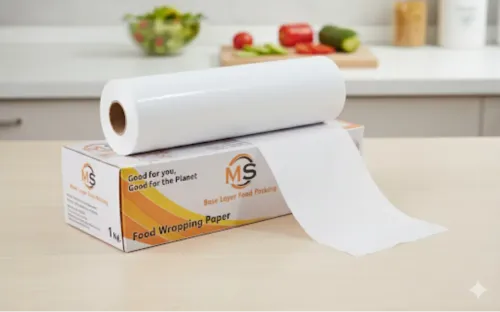
Baselayer Food Packing serves commercial buyers requiring butter paper and related food packaging products. Businesses assessing the provider can compare its available formats and quantities against documented operational requirements.
Supply Readiness Supports Business Growth
A growing restaurant or food brand often focuses heavily on menu development, staffing, marketing, and delivery operations. Packaging supply can receive less attention until a shortage disrupts service.
A better approach is to treat frequently consumed packaging as essential operational inventory.
For restaurants, bakeries, caterers, cloud kitchens, wholesalers, and food retailers across Delhi and the broader regional market, reliable butter paper procurement involves three elements — a suitable product specification, realistic inventory planning, and a supply arrangement that matches consumption.
When these elements are established early, packaging becomes easier to manage as order volumes increase. This allows purchasing teams to spend less time reacting to shortages and more time maintaining predictable, efficient supply for everyday food operations.
Keywords